Before signing a retail lease, measure the site's actual foot traffic — passers-by per hour, by day of week and time of day — for at least two weeks, and compare it against the sites you're weighing it against. Everything else in the decision (fit-out, rent, staffing plan, revenue forecast) is built on that number, yet most tenants accept it as folklore: the agent's "high foot traffic location", a council count from years ago, or an hour of standing on the footpath with a clicker. A lease is a multi-year commitment; the number underneath it deserves better than an anecdote.
This guide covers how to measure a candidate site properly, what to look for beyond the raw count, and why the same sensor that vets the lease keeps paying for itself at every rent review afterwards.
Rent is a price — foot traffic is what it buys
Strip a retail lease to its economics and you're not renting square metres, you're renting access to a stream of people. Two shops of identical size a street apart can differ several-fold in passing traffic, and the rent rarely reflects the difference precisely — location pricing is sticky, negotiated, and full of folklore. That spread is where good and bad leases are made.
Which means the tenant who knows the real number has an edge on both sides of the table:
- Before signing — you can compare candidate sites on passers-by per dollar of rent, instead of on gut feel and the agent's adjectives.
- After signing — you can judge your own performance fairly. A store converting a thin street brilliantly and a store squandering a busy one post the same revenue; without the street count, the register can't tell you which one you are.
"High foot traffic area" is the most expensive unverified claim in retail. It's the one line in the listing you can now check.
How to measure a candidate site properly
The old methods don't survive contact with reality. An hour with a clicker samples one hour — sites live and die on when traffic happens, not just how much. Council or landlord counts are often years old, taken mid-block rather than at your frontage, and never broken down by hour. Mobile-location datasets estimate broad precinct movement, but they can't resolve one shopfront from its neighbour.
What works is the same instrument you'd use to run the store: a small AI vision sensor with a weatherproof housing, temporarily mounted with a view of the frontage, counting anonymous passers-by on-device — no footage stored, nobody identified, no privacy landmines. Then:
- Count for at least two weeks — four is better. One week can be distorted by weather, a public holiday or a local event. Two weeks gives you a real weekly rhythm; four lets you see it repeat.
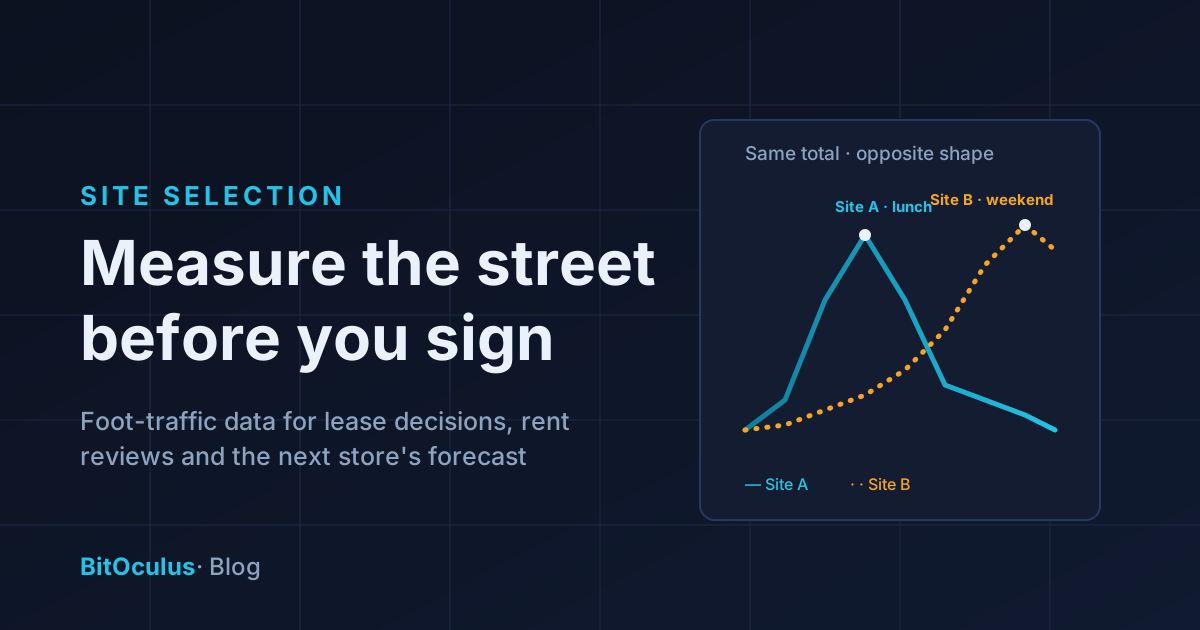
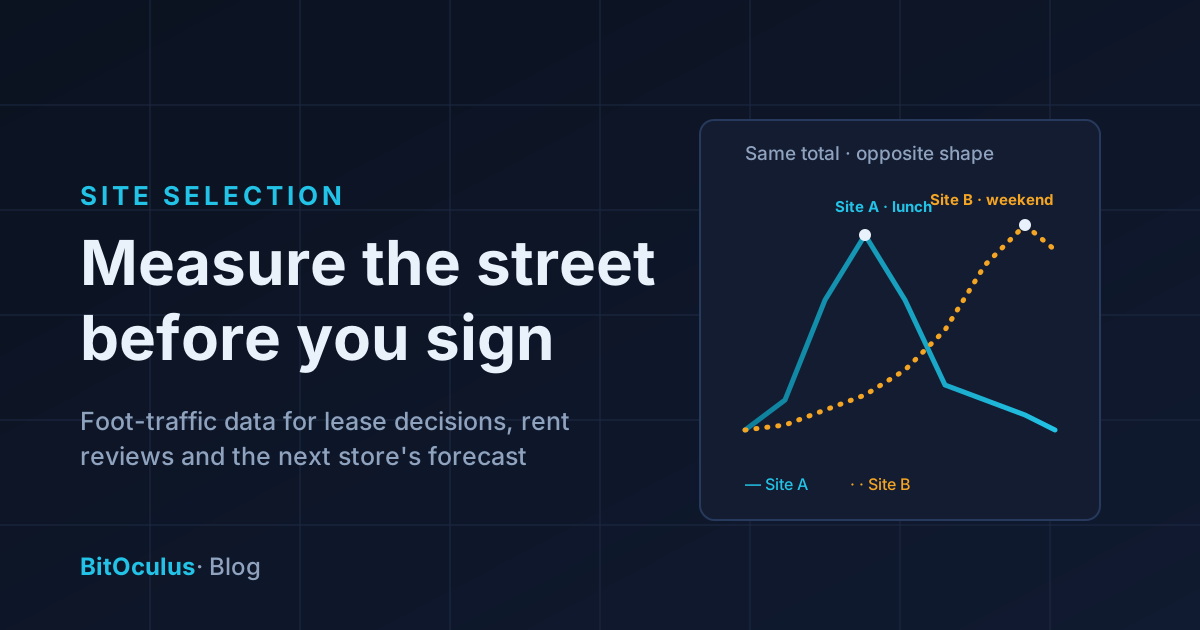
- Break it down by hour and day. The shape matters more than the total. A site that peaks weekday lunchtimes suits a café and starves a homewares store; a site that lives on Saturday afternoons is the reverse.
- Match the shape to your trading hours. Traffic outside the hours you'd trade is worth nothing to you. A busy nightlife strip is empty rent to a 9-to-5 business.
- Compare sites on the same weeks. If you're weighing two or three candidates, measure them over the same period so seasonality and weather cancel out.
Reading the count: total traffic is only half the story
Once the data is in, three second-order reads separate a good decision from a lucky one:
- Directional flow. Which way are people walking, and at what time? A site on the morning-commute side of the street sees different customers from the evening side. Doors, signage and window messaging should face the flow, and a sensor that tracks direction shows it plainly.
- Comparable capture rates. If you already run a store, you know your capture rate — the share of passers-by you convert into entries. Apply it to the candidate site's count and you have a grounded entries forecast, which cascades into revenue, staffing and a defensible view of what the rent is worth. That model beats any rule of thumb, because every input is measured.
- The catchment story vs the frontage reality. Precinct-level reports (centre managers, mobile data) describe the suburb; your lease is for one specific frontage. When the two disagree, the frontage wins. Measure the metre you're actually renting.
The lease is signed — the data keeps working
Here's the part most tenants miss: the case for measuring doesn't end at signing. It compounds.
- Rent reviews. Market-rent negotiations run on evidence, and the party with data negotiates differently. A year of frontage counts showing traffic down since the anchor tenant left, the car park changed or the bus stop moved is a concrete input to a review — not a feeling, a dataset.
- Performance attribution. When revenue dips, the first question is traffic or conversion? If the street count fell, the problem is outside — precinct, season, roadworks. If the street held and entries fell, it's your window. If entries held and sales fell, it's the floor. Each diagnosis has a completely different fix, and staffing the floor to the real curve is often the cheapest one.
- The expansion playbook. Once you know store #1's capture rate and conversion, evaluating store #2 stops being a leap of faith: measure the new frontage, apply your own measured ratios, and the forecast builds itself from numbers you trust.
Landlords and leasing agents are waking up to the same logic from the other side — a frontage with verified traffic data is easier to lease and easier to price. Whichever side of the table you're on, the direction of travel is the same: the folklore era of "great foot traffic, trust me" is ending.
Frequently asked questions
How do I measure foot traffic at a potential retail location?
Mount a temporary, weatherproof people-counting sensor with a view of the frontage and count passers-by for at least two weeks, broken down by hour and day of week. Edge-AI sensors do this anonymously — every frame is processed on the device and discarded, so no footage is stored and no one is identified. Compare candidate sites over the same weeks so weather and seasonality affect them equally.
How much foot traffic does a retail store need?
There's no universal number — it depends on your conversion rate, average sale and margin. The practical approach is to work backwards: revenue target ÷ average sale = buyers needed; buyers ÷ your conversion rate = entries needed; entries ÷ a realistic capture rate = passers-by needed during your trading hours. Each ratio can be measured rather than guessed, which turns "enough traffic" into an actual threshold you can test a site against.
Can I use foot traffic data to negotiate rent?
Yes — it's one of the strongest evidence-based inputs a tenant can bring to a rent review. A continuous frontage count documenting how passing traffic has changed (a lost anchor, altered parking, a moved crossing) grounds the negotiation in data rather than impressions. It works in both directions: it can justify holding rent down, and it can tell you a site is genuinely worth paying to keep.
Is it legal to count foot traffic on a public street?
Counting anonymous passers-by with an edge-AI sensor — where frames are processed on-device, instantly discarded, and no one is identified or recorded — collects no personal information, which keeps it outside most privacy-law obligations. Recording video of the street is a different matter entirely. We cover the distinction in detail in our privacy and legal guide.
BitOculus counts frontage traffic and entries from a single weatherproof sensor — on-device processing, no footage ever stored, and the hourly breakdown that makes a site decision defensible. The founding cohort gets hardware and installation included. Explore a live dashboard or talk to the founder.