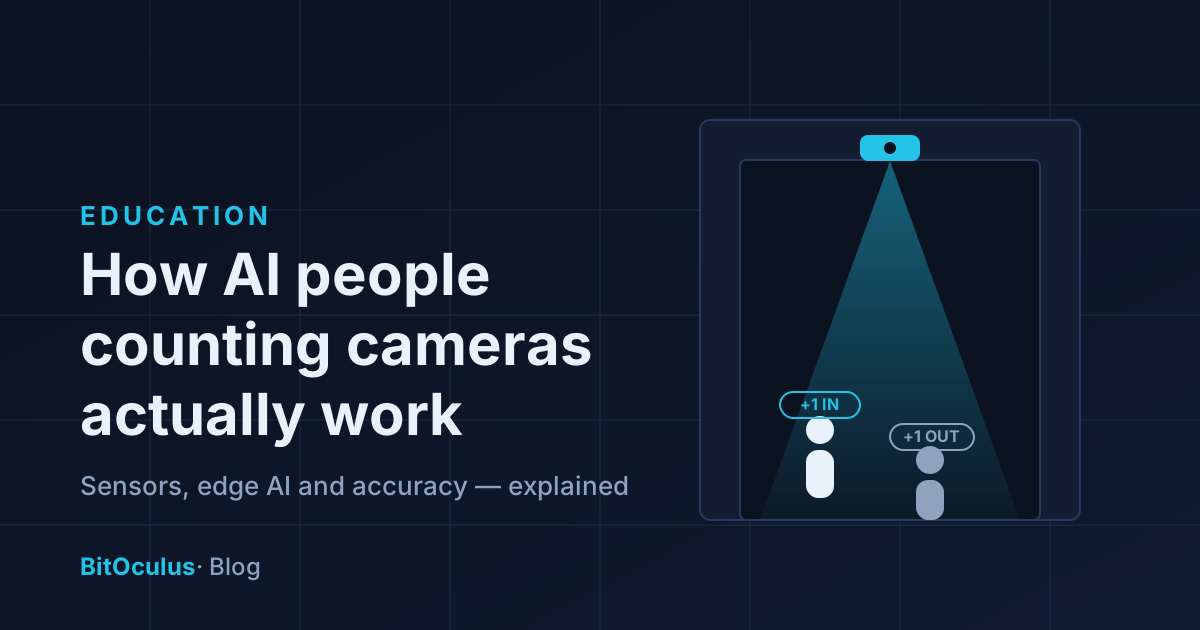
An AI people counting camera is a small sensor, usually mounted above a doorway, that uses computer vision to detect and count people as they pass underneath — entries, exits, direction of travel and even U-turns — without recording video or identifying anyone. Modern edge-AI sensors reach up to 99% counting accuracy, which is why they have largely replaced infrared beams and thermal counters in serious retail analytics.
If you're researching people counter solutions for a shop, café, gym or venue, this guide explains how the technology works, how the main approaches compare, and what actually determines accuracy in the real world.
What is a people counter?
A people counter (also called a footfall counter, traffic counter or door counter) is any device that measures how many people enter, exit or pass by a physical space. The count itself is just the raw input — the value comes from the metrics built on top of it: capture rate, conversion rate, bounce rate and hourly traffic curves. We cover those in detail in the four retail metrics a people counter unlocks.
The four main people counting technologies, compared
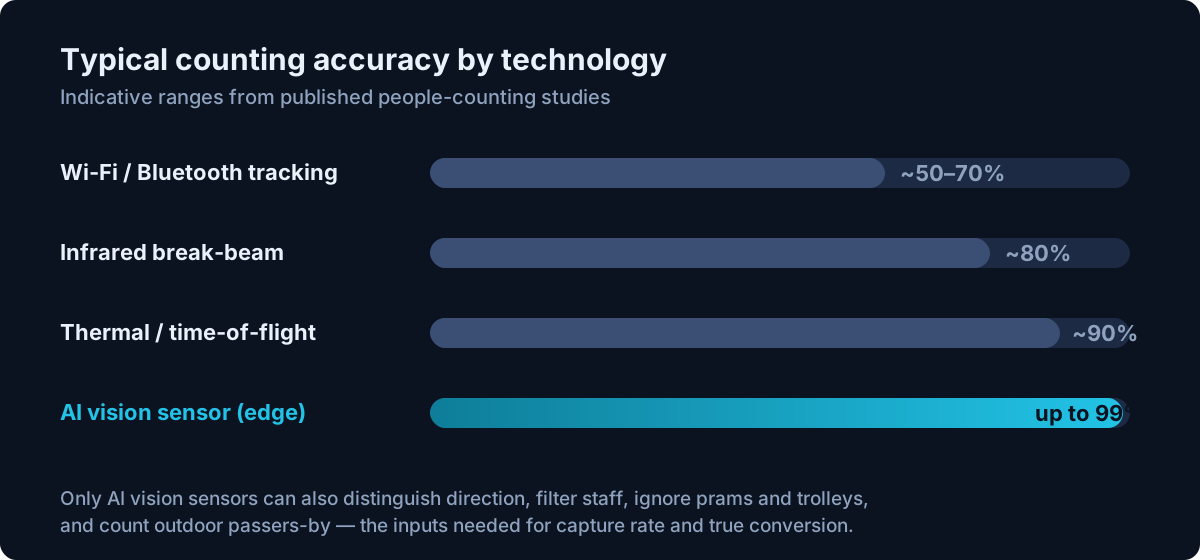
Not all people counters are created equal. The four common approaches differ enormously in accuracy and in what they can actually tell you.
1. Infrared break-beam counters
A transmitter and receiver sit either side of the door; every interruption of the beam counts as one person.
- Pros: cheap, simple, no privacy concerns.
- Cons: two people walking side by side count as one. Prams, trolleys and dogs count as people. No direction, no dwell, no outdoor counting. Real-world accuracy is typically around 80% — and it degrades on busy days, exactly when the data matters most.
2. Thermal and time-of-flight sensors
Overhead sensors detect body heat or measure depth to separate people from objects.
- Pros: anonymous by nature, better at separating side-by-side walkers, around 90% accuracy.
- Cons: struggle with hot weather, doors that open to direct sun, and crowded thresholds. They can't see the street, so they can never measure how many people walked past without coming in.
3. Wi-Fi and Bluetooth tracking
These systems estimate traffic by detecting smartphone radio signals.
- Pros: wide coverage, can estimate repeat visits.
- Cons: the weakest option on both accuracy and privacy. Modern phones randomise their MAC addresses, so counts drift wildly (50–70% is typical). And because the technique works by tracking personal devices, it raises exactly the privacy questions that anonymous counting avoids.
4. AI vision sensors (edge AI cameras)
A camera sensor watches the doorway, and an onboard neural network detects people in each frame, tracks them across frames and converts their paths into counting events. This is the approach BitOculus uses.
- Pros: up to 99% accuracy; distinguishes direction (in vs out); filters staff; ignores prams, trolleys and small children when configured to; works outdoors, which makes street-traffic and capture-rate measurement possible; detects U-turns and bounces.
- Cons: quality varies widely between vendors — the questions to ask are where the processing happens and what leaves the device.
How an AI people counting camera actually counts
The pipeline inside a modern edge-AI sensor looks like this:
- Detection. A neural network finds every person in the current frame — heads and shoulders from above, which works regardless of clothing, height or lighting.
- Tracking. Each detected person is followed frame-to-frame as an anonymous moving object: "object 47 moved from the left of the frame toward the door."
- Counting events. When a tracked path crosses a virtual line or zone (the doorway, the edge of the footpath), the sensor emits an event: an entry, an exit, a pass-by, or a U-turn.
- Discard. On a privacy-first sensor, the frames are discarded immediately after processing — in milliseconds. Only the anonymous events and aggregate numbers ever leave the device.
The crucial phrase is on-device (or "edge") processing. A sensor that streams video to the cloud for counting is a surveillance camera with extra steps. A sensor that does all of its thinking onboard and emits only numbers never creates footage that could be stored, hacked or subpoenaed. We've written a full guide to the privacy and legal side of people counting cameras.
What determines real-world accuracy?
Vendor accuracy claims are measured somewhere. The question is whether they hold at your entrance. The factors that matter:
- Mounting height and angle. Overhead or high-angle mounting (roughly 2–6 metres) gives the AI a clean view of heads and shoulders, with minimal occlusion.
- Lighting extremes. Direct sun, strong backlight from a glass shopfront, and dim evening trade are where cheap sensors fall apart. Look for hardware specified for harsh light and verified on site.
- Staff filtering. In a small store, staff crossing the threshold dozens of times a day can inflate traffic by 20% or more. Good systems exclude staff automatically.
- Deduplication. A shopper who pops out to take a call and comes back shouldn't count twice if you want a true conversion rate.
- On-site verification. The only accuracy figure that matters is one verified against ground truth at your own door. Ask every vendor whether they do this during onboarding — BitOculus does, as standard.
Frequently asked questions
Do people counting cameras record video?
Privacy-first sensors don't. Edge-AI sensors like BitOculus process every frame on the device and discard it immediately — no video is stored or transmitted, and no faces are captured. Some camera-based systems do record or stream footage, so it's the first question to ask any vendor.
How accurate are AI people counters?
Well-installed edge-AI sensors achieve up to 99% accuracy, compared with roughly 80% for infrared beams, 90% for thermal sensors and 50–70% for Wi-Fi tracking. Insist on on-site verification rather than a datasheet number.
Can a people counter work outdoors?
AI vision sensors with weatherproof (IP66-rated) housings can count outdoor foot traffic — passers-by on the street — as well as entries. That outdoor count is what makes capture rate measurable, and it's something beam and thermal counters simply cannot do.
How hard is installation?
For a modern sensor: one unit above the door, one Power-over-Ethernet cable or a Wi-Fi connection, mounted between roughly 2 and 6 metres. BitOculus installs and calibrates everything on site for founding stores — join the waitlist to get a white-glove install.
BitOculus is a privacy-first AI people counting sensor built for shopfronts: up to 99% verified accuracy, all processing on-device, no footage ever stored. See how it works or get in touch.